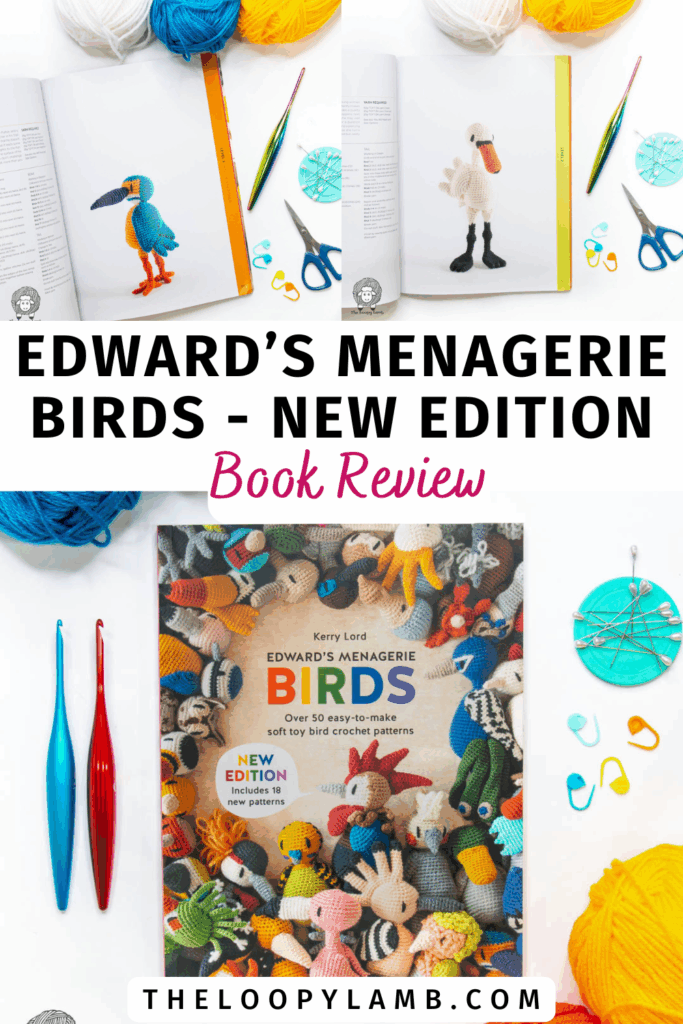
A new edition of a popular crochet book always raises the same questions: what’s actually changed, and is it worth it? In this Edward’s Menagerie Birds New Edition review, I’m breaking down exactly what you’ll find inside, how the patterns work in real life, what’s new in this edition and who this book is truly for. It’s a colorful collection of birds filled with personality, but there are a few important things you’ll want to know before adding it to your shelf.
I’m also giving away a copy of this book to one lucky winner. Keep reading to learn how to enter to win.
Pin this for later Save
Thanks to David & Charles Publishing for providing me with a copy of the book free of charge in exchange for my honest opinion. I do not guarantee a positive review of any product reviewed on my site. All opinions shared here are my own. This post may contain affiliate links, which means that I may earn a small commission from purchases made through these links at no cost to you.
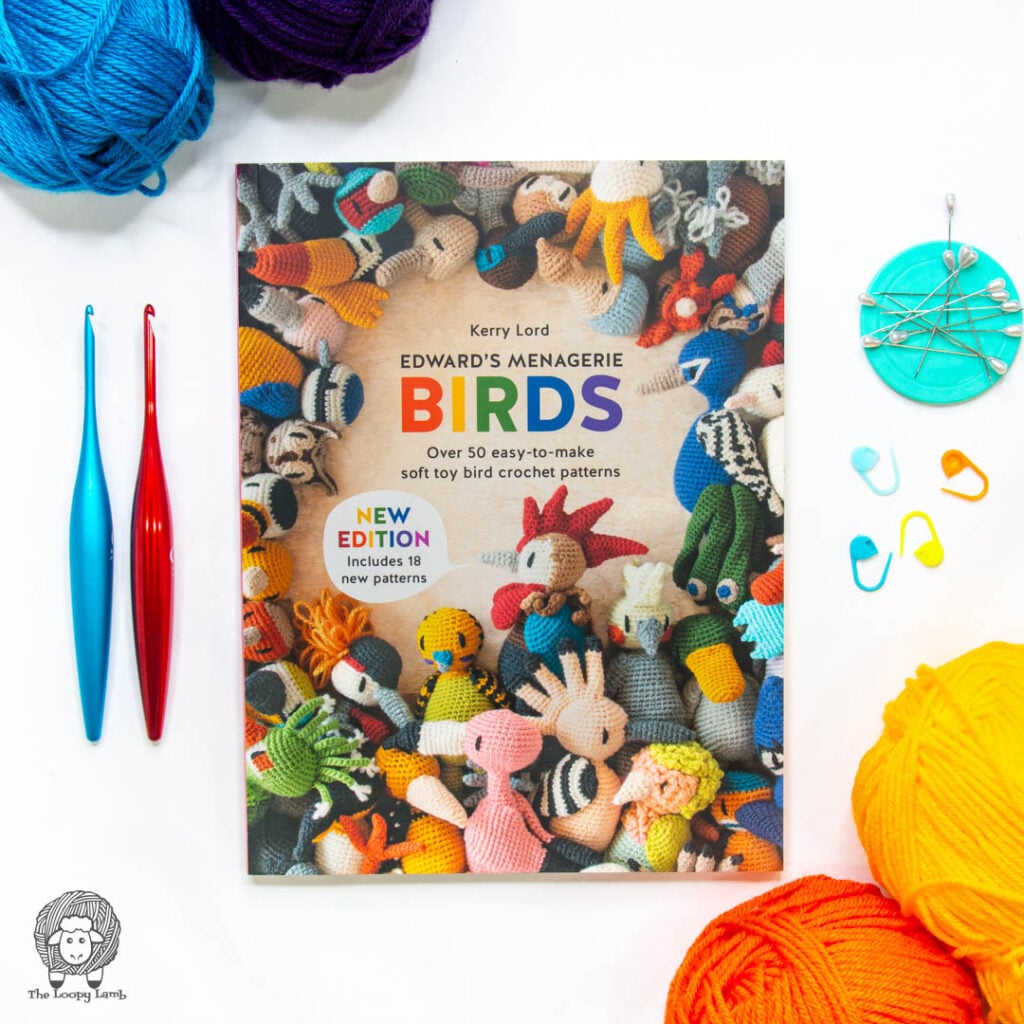
Table of contents
- About the Author
- What Patterns are Included In Edward’s Menagerie Birds New Edition?
- What are the Patterns Like to Work With?
- What’s New in the New Edition?
- What Crochet Terminology Is Used in Edward’s Menagerie Birds?
- What Skill Level is This Book Appropriate For?
- What Supports are Included for Makers?
- What Supplies You Need For the Patterns in This Book
- Where to Buy
- Overall
- FAQs
About the Author
Kerry Lord is the founder of the British yarn brand TOFT that specialiszes in luxury wools. Kerry is the author of numerous books, including these titles (click the links to view my reviews of some of these titles):
- How to Crochet Animals – Wild
- How to Crochet Animals – Pets
- How to Crochet Animals – Ocean
- How to Crochet Animals – Farm
- Edward’s Imaginarium
- Edward’s Menagerie
- Edward’s Crochet Doll Emporium
- Edward’s Menagerie Dogs
- and the upcoming title Crochet Fairy Tales Cottage Stories
What Patterns are Included In Edward’s Menagerie Birds New Edition?
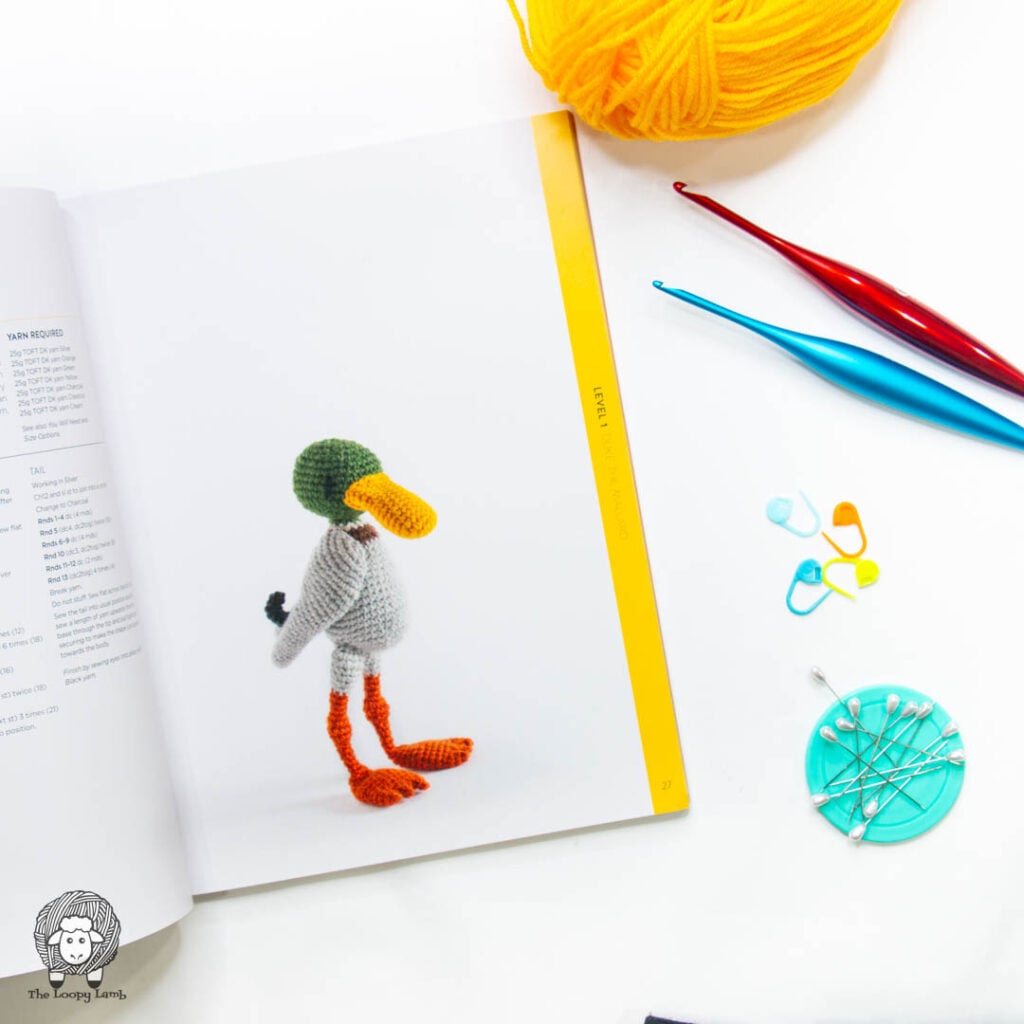
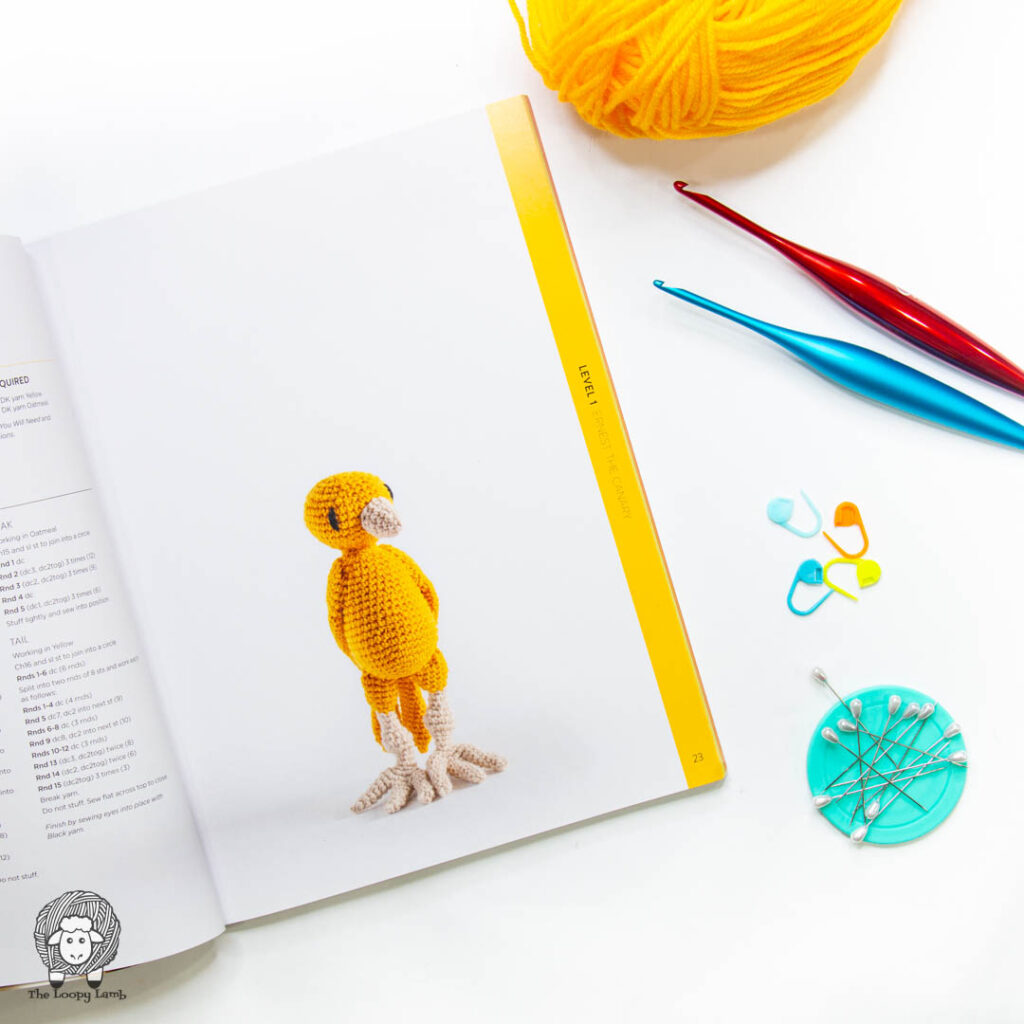
This colourful book includes 50 crochet bird patterns, so there is a very large and varied collection of crochet birds to choose from. The bird patterns are grouped into three skill levels rather than using the usual beginner, easy, intermediate, and advanced labels.
Level 1:
- Ernest the Canary
- Dave the Gull
- Duke the Mallard
- Celine the Dove
- Sophia the Flamingo
- Vince the Blue-Footed Booby
- Dora the Wood Pigeon
- Ina the Stork
- Desmond the Blue Tit
- Alan the Magpie
- Barney the Barn Owl
- Huck the Pelican
- Ethel the Kiwi
- Jacob the Hoopoe
Level 2:
- Henry the Raven
- Rory the Northern Cardinal
- Margot the Swan
- Hazel the Hen
- Arthur the Blue-Winged Teal
- Orlando the Roeate Spoonbill
- Pedro the Wine-Throated Hummingbird
- Ross the Turkey
- Elizabeth the Dodo
- Florian the Ostrich
- Emily the Vulture
- Dudley the Red Grouse
- Zane the Grey Crowned Crane
- Abraham the Bald Eagle
- Kevin the Cassowary
- Travis the Pink Robin
- Tricia the Silkie Chicken
Level 3:
- Elvis the Cockatoo
- Meghan the Toucan
- Robin the Robin
- Jorge the Jay
- Gareth the Puffin
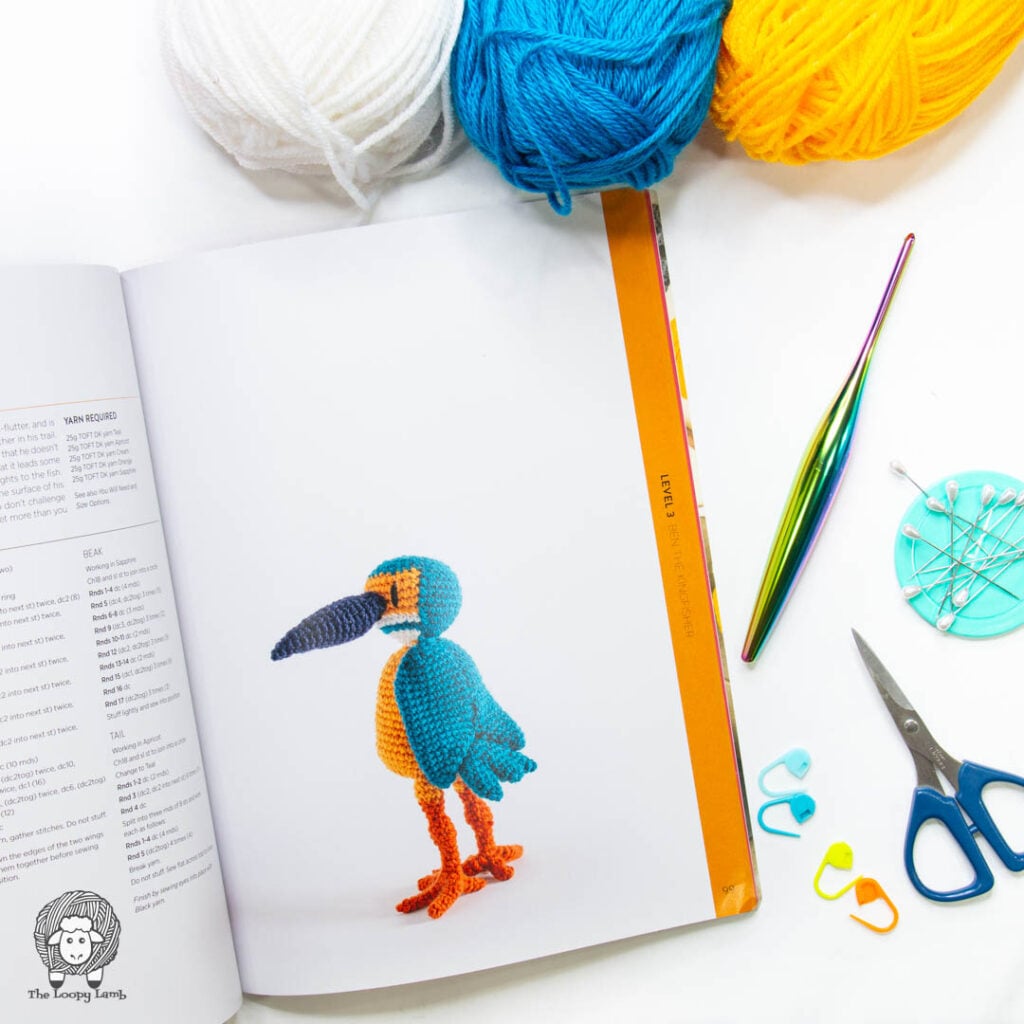
- Ben the Kingfisher
- Yolanda the Cockatiel
- Gianni the Lovebird
- Putu the Lesser Bird of Paradise
- Jack the Macaw
- Renee the Shalow’s Turaco
- Terence the Budgerigar
- Enid the Long-Eared Owl
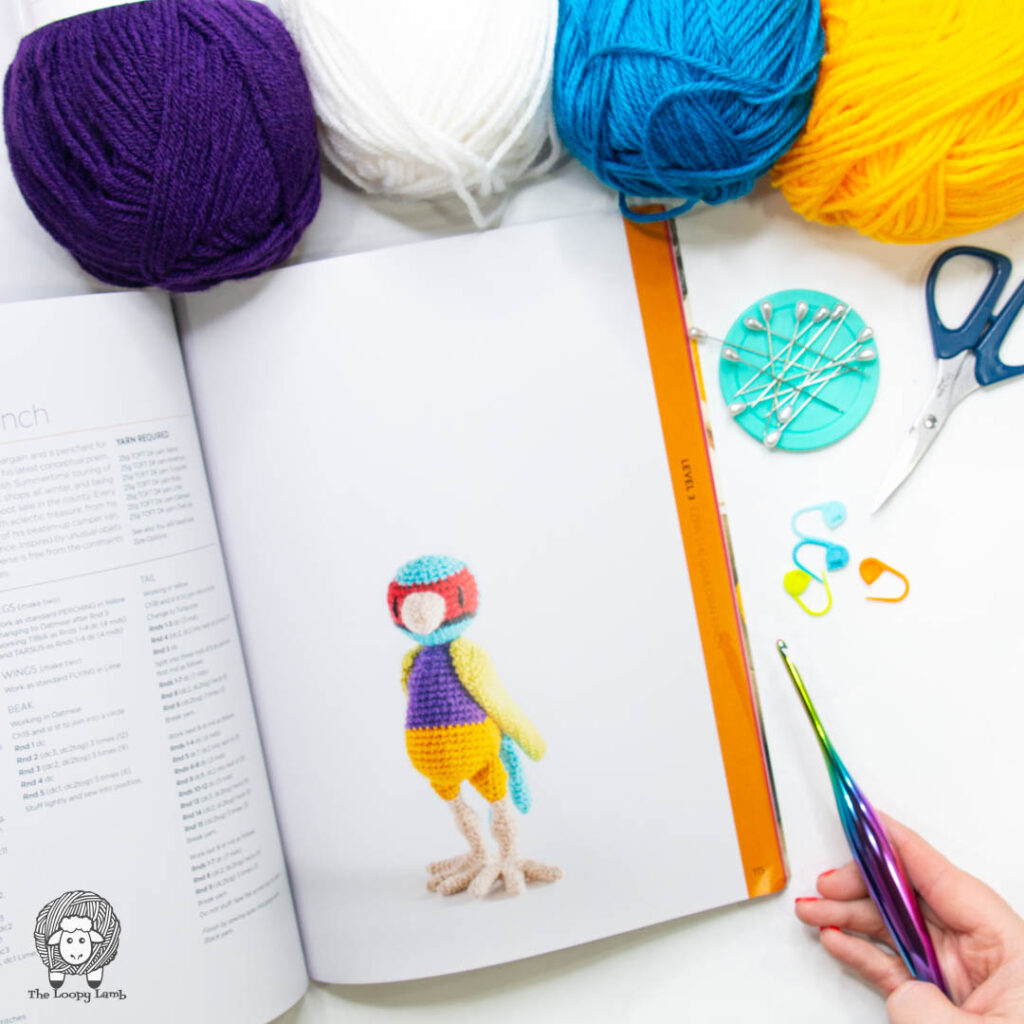
- Ezra the Gouldian Finch
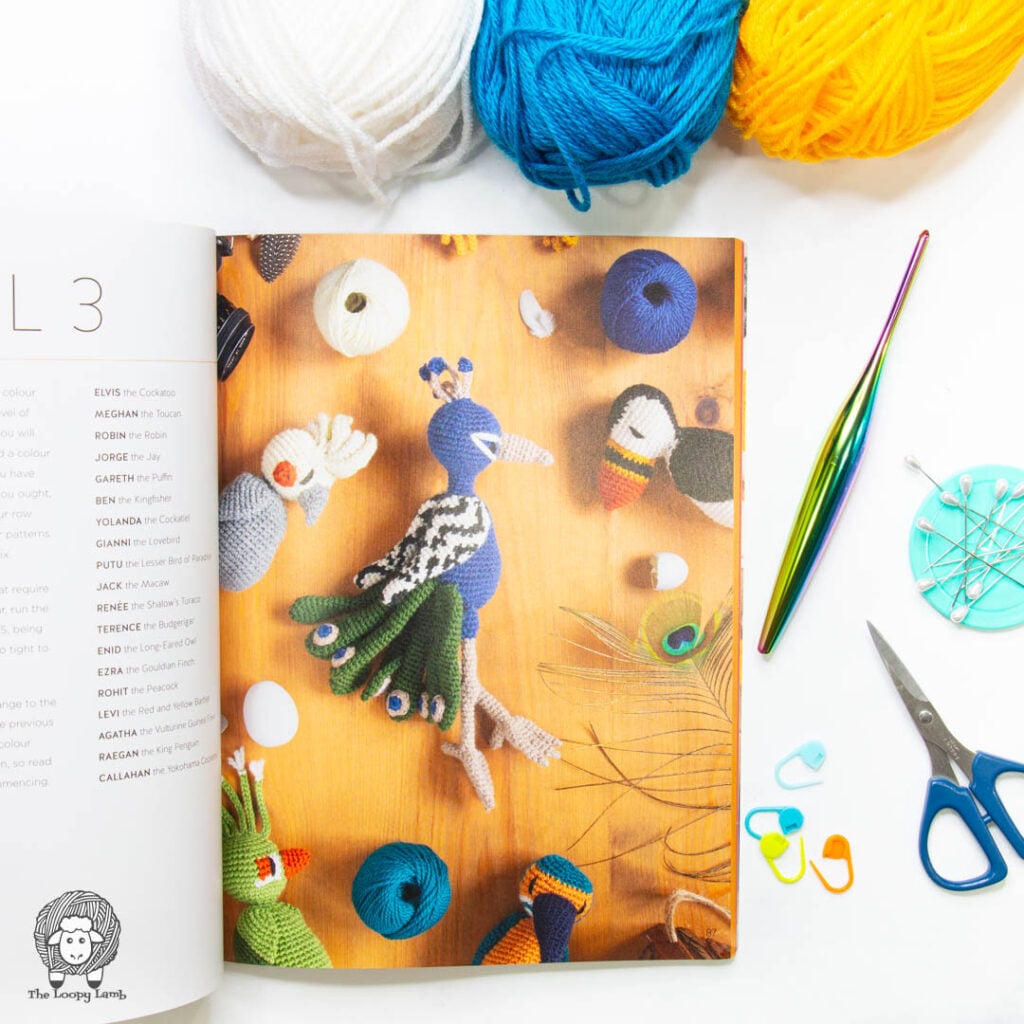
- Rohit the Peacock
- Levi the Red and Yellow Barbet
- Agatha the Vulturine Guinea Fowl
- Raegan the King Penguin
- Callahan the Yokohama Cockerel
One of the things that gives this pattern book so much charm is the little bits of personality that go with each design. These aren’t just bird patterns in the plainest sense. They’re loveable birds with kooky characters and their own personality. Some of the blurbs are genuinely funny. There’s a swashbuckling macaw, a glass-ceiling-smashing owl that works in Parliament, and a bashful flamingo being bullied at school.
What are the Patterns Like to Work With?
This is the section I think matters most if you’re trying to decide whether this book is right for you.
For all the support material included, I really wish there had been a more direct “how to read these patterns” section. Kerry Lord’s writing style feels much closer to the standard form you often see in knitting patterns. Terms like “work as standard” are used heavily, and the patterns are written in a very stripped-back way.
For example, if a round asks you to work one stitch into each stitch around, it may simply say something like “Rnd 3 dc.” If you’re already comfortable with amigurumi (or even knitting patterns), that probably won’t faze you. If you’re a beginner crocheter, complete beginner, or someone making amigurumi for the first time, that style may feel more confusing than helpful.
The patterns also rely heavily on a universal pattern base for the body, neck, and head, which is found at the front of the book. That means you’ll be flipping back and forth between that base and the bird-specific variations for your chosen project. I don’t think that’s a dealbreaker, but I do think it makes the learning curve steeper than it needs to be for total beginners. My tip is, if you’re struggling with the flipping back and forth and putting the two sets of instructions together, write them out on a separate piece of paper with the instructions together.
If you read the book cover to cover first like I did, it makes a lot more sense. If you don’t, and you open a pattern that says something along the lines of “work as standard in cocoa changing to chestnut after rnd 8 then fudge after rnd 17,” you may find yourself doing a lot of head scratching. Work as standard from what, you may ask? The standard body form at the beginning of the book.
So my honest take is this: the patterns themselves are not necessarily difficult, but the writing style is very lean and assumes a high level of comfort with reading patterns and amigurumi patterns and techniques. A crocheter who already understands amigurumi patterns will likely do much better with this book than someone choosing it as their very first project.
What’s New in the New Edition?
This was something a reader specifically asked me about, so I dug into it as best I could.
I wasn’t able to compare the two books side by side in person, so I can’t speak to every possible revision throughout the book as the first edition has been discontinued.
Based on my own comparison of the table of contents from the first version that I found online against this new edition, the following patterns appear to be gone from the earlier original publication: Oscar the Penguin, Gilbert the Pheasant, Anik the Snowy Owl, Petra the Rockhopper Penguin, Caesar the Emperor Penguin, Scott the Woodpecker, Kit the Rooster, and Mateo Cock of the Rock. I cannot comment as to whether they have been updated or improved at all.
The following appear to be new patterns in the new edition:
Level 1:
Desmond the Blue Tit, Barney the Barn Owl, Jacob the Hoopoe
Level 2:
Rory the Northern Cardinal, Arthur the Blue-Winged Teal, Orlando the Roseate Spoonbill, Pedro the Wine-Throated Hummingbird, Emily the Vulture, Dudley the Red Grouse, Zane the Grey Crowned Crane, Travis the Pink Robin
Level 3:
Yolanda the Cockatiel, Putu the Lesser Bird of Paradise, Renee the Shalow’s Turaco, Terence the Budgerigar, Ezra the Gouldian Finch, Levi the Red and Yellow Barbet, Agatha the Vulturine Guinea Fowl, Raegan the King Penguin, Callahan the Yokohama Cockerel
So if you already own the first edition and are wondering whether this version offers new birds, the answer does appear to be yes.
What Crochet Terminology Is Used in Edward’s Menagerie Birds?
This book uses UK crochet terminology. There is a UK-to-US conversion chart included in the book. For those that aren’t familiar with the terms, UK double crochet is the same as US single crochet.
That’s important to know before you start, especially if you’re used to US terms and tend to jump straight into a pattern without reading the opening pages.
What Skill Level is This Book Appropriate For?
The book doesn’t use the traditional pattern grading system of beginner, easy, intermediate, and advanced labels. Instead, it breaks patterns up into Level 1, 2, and 3. There is a breakdown explaining the skills needed for each level, and I do think it’s worth reading before getting started as there are useful tips hidden in this section you may need to use later.
Even though the patterns i this colourful collection of birds uses mostly basic stitches, I personally would not hand this to total beginners or an amigurumi newbie as their first project unless they are very comfortable troubleshooting.
A confident crocheter who has already made a few toys and doesn’t mind a more concise writing style will likely do much better with this book than an absolute beginner. In my opinion, it is a stronger fit for intermediate to advanced crocheters, or at least a beginner who is very patient, resourceful and happy to look up outside help when needed.
What Supports are Included for Makers?
There are two main support sections in the book.
At the front, you’ll find a “How to Use This Book” section, materials lists, and the standard body, neck, head, and leg patterns used in all the patterns. At the back, there’s a “Technicals” section with stitch tutorials with step-by-step photos, finishing techniques, stuffing and sewing advice, and washing information.
On paper, that sounds like a lot of support, and there are definitely useful technical guides in here. However, I found some of the help a bit high level for newer amigurumi makers. I also found some of the information slightly out of order which could lead to frustration. For instance, I couldn’t find any mention of when and how to use the modelling wire with the patterns. The only instructions for using this are at the back of the book. So if you just get started crocheting, assuming it will be noted, you may be disappointed to find you have a floppy bird that can’t stand on its own
So yes, the book includes supports. I just don’t think the technique explanations of those supports are always presented in the easiest way possible.
What Supplies You Need For the Patterns in This Book
The book uses TOFT DK wool and a 3 mm hook, along with stuffing, scrap yarn, black embroidery thread, sewing needles, and modelling wire. Yarn color names are listed exactly so shopping for the yarn online is easy.
I would read the “You Will Need” section carefully before you begin as well the the following section after that which discusses making the birds different sizes by changing your yarn and hook combination.
Where to Buy
Want to grab a copy of Edward’s Menagerie Birds – New edition? It’s available to purchase from the suppliers below:
Overall
Overall, this is a fun, visually appealing book full of crochet birds with personality. As a bird lover, I can absolutely appreciate having a big library of bird crochet patterns all in one place, and there’s no denying that this is a very colourful book full of whimsical designs.
That said, I do think the experience of using the book will depend heavily on your skill level and how comfortable you are with troubleshooting. The easy-to-master techniques language used around marketing this series may sound inviting, but I would not personally recommend this one to absolute beginners unless they’re very confident reading between the lines and using outside teaching resources.
If you’re an intermediate or advanced crocheter, enjoy amigurumi, and want a large selection of crochet birds with larger-than-life personalities, this could be a lovely addition to your shelf. If you’re a complete beginner hoping for highly detailed hand-holding throughout, I think there are better books to start with.
Check Out My Latest Book & Product Reviews:
- Crochet Snow Globes by Olena Jones
- Pokémon Crochet Squares by Ira Rott
- Crocheted Flowers by Emma Varnam
- Mini Amigurumi Zodiav by Linda Urbanneck
- Check out my Search Press book, Crochet Furry Friends
- Check out all my crochet book reviews here.
FAQs
The book includes 50 crochet bird patterns.
No, but the book is designed around TOFT DK wool. You can substitute yarn, though your finished size and look may vary depending on the yarn and hook sizes you choose.
The birds in this book are built from the same basic body structure, with changes added to create different birds. That helps create consistency across the book, but it also means you need to understand how the base pattern system works.
This depends on your experience level and what you want from the book. If you’re already comfortable with amigurumi and don’t mind bare bones pattern writing, it can be a fun addition to your crochet library. If you’re a complete beginner or want very detailed teaching throughout each pattern, this may not be the book for you.
Want Your Own Copy? Enter the Giveaway Below!
Thanks to the publisher, I’m giving away a copy of Edward’s Menagerie Birds New Edition by Kerry Lord!
This giveaway on The Loopy Lamb is open to worldwide participants (except where void by law). Giveaway ends Saturday, May 9th, 2026, at 11:45pm Eastern Standard time.
To enter, simply use the King Sumo form below. If you’re on mobile and run into any trouble, try switching to a desktop computer. Only your email and name are required to enter—everything else, like following on social media, is optional and just for bonus entries!
Can’t see the entry form below? Click here: Giveaway Form