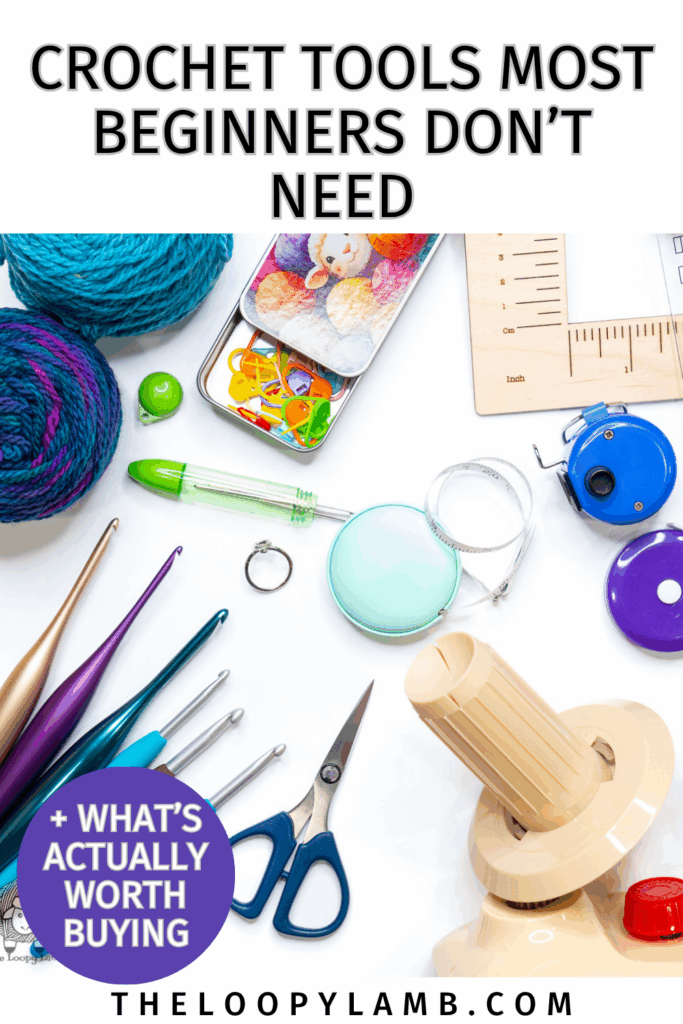
Crochet can be an incredibly affordable hobby… until social media convinces you that you need 47 different crochet tools, gadgets, and accessories just to make a cozy crochet blanket.
Over the years, I’ve tried, tested, been gifted, and seen a LOT of crochet tools. Some of them became essential tools in my crochet toolkit. Others? Not so much.
Now, this doesn’t mean these crochet tools are useless. Different crocheters enjoy different things, and what works for one person may not work for another. But as someone who designs crochet patterns, teaches crochet and writes about crochet professionally, these are the popular crochet tools I personally don’t think most beginners need to rush out and buy right away.
I’m also sharing the crochet tools I do think are worth having because a few good basics can make crocheting so much easier and more enjoyable.
📌 Pin This Blog Post to Save It For Later Save It
*This post may contain affiliate links, which means that I may earn a small commission from qualifying purchases made through these links at no additional cost to you. All opinions are my own.*
Table of contents
Crochet Tools Most Beginners Don’t Need Right Away
Expensive Yarn Bowls
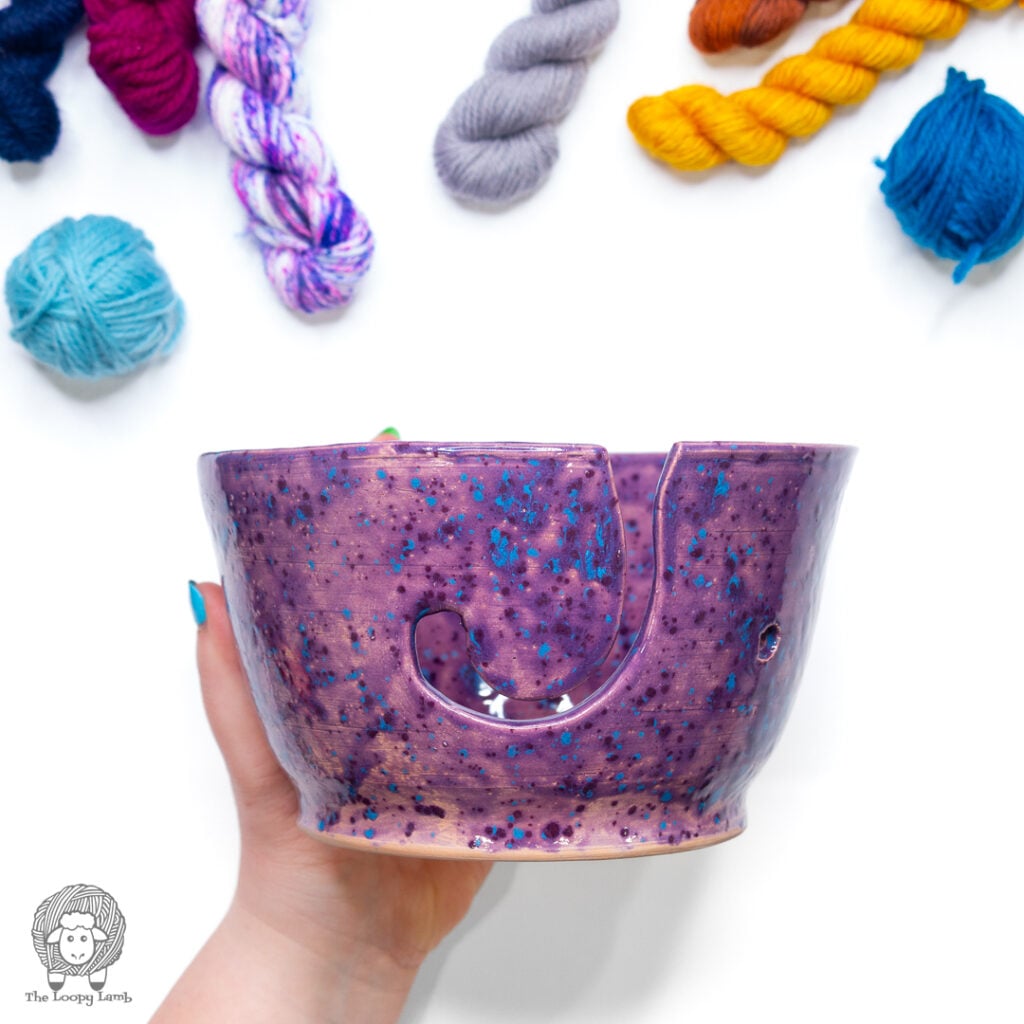
Yarn bowls come in many different shapes and sizes and are designed to hold your yarn while you crochet. While they can absolutely be useful for some crocheters — especially if you have pets that like to attack your yarn or you’re tired of yarn rolling across the floor — I think they’re also one of those crochet accessories that often end up collecting dust.
I’ve been gifted several yarn bowls over the years, and honestly couldn’t use most of them at first because I primarily used yarn sold in skeins rather than yarn cakes or balls. The skeins didn’t fit properly in the bowls, and it wasn’t worth hand-winding yarn into balls just so I could use them.
Even now, I usually keep my crochet projects stored in a project bag, so it’s easier for me to just leave the yarn in the bag while I work instead of pulling out a yarn bowl.
While yarn bowls can definitely be useful for some crocheters, I don’t think they’re something most beginners need to rush out and buy unless it’s a tool you specifically know you’ll use regularly.
Crochet Tension Rings
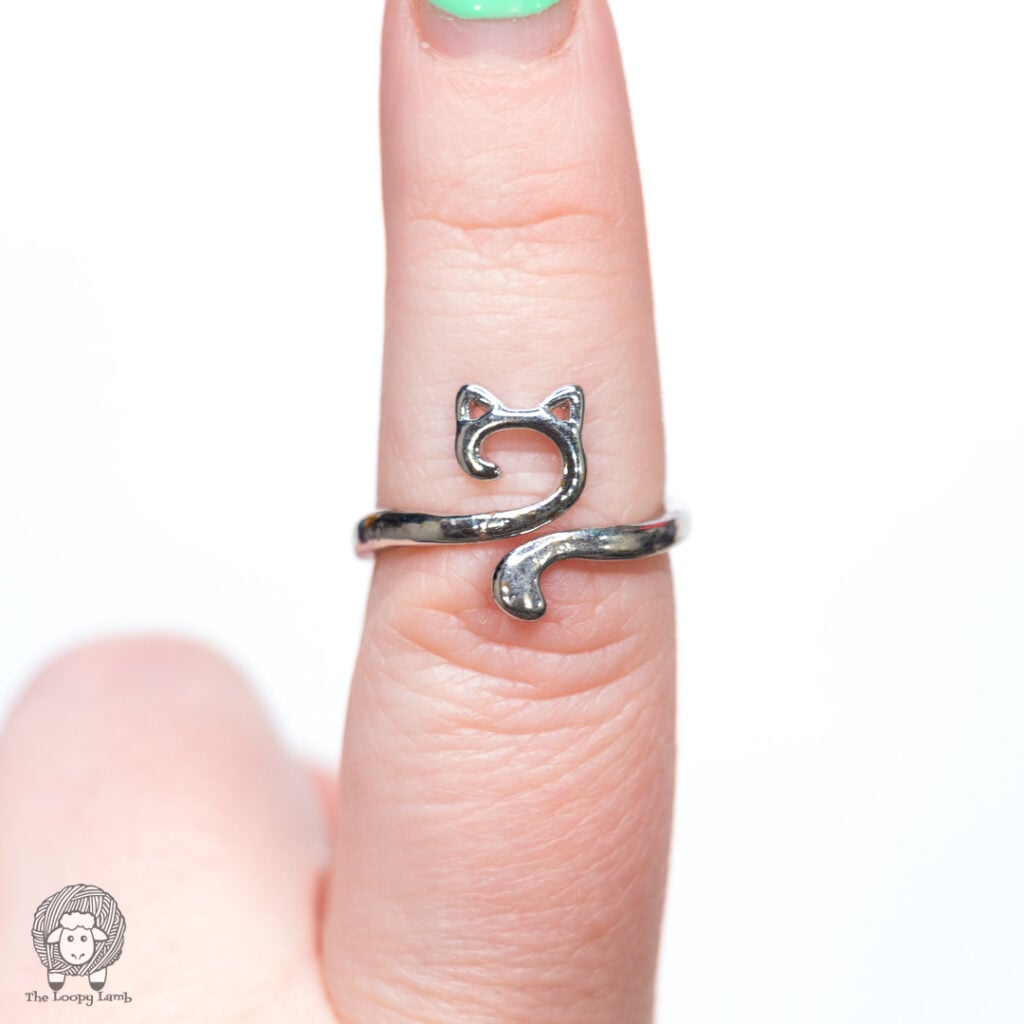
Crochet tension rings are rings that you feed your yarn through to help manage yarn tension or protect your finger from what some crocheters call “yarn burn” or a slight indentation on the finger from the yarn while crocheting.
Some crocheters absolutely swear by them, but personally, I don’t think they’re something most beginners need right away (or ever). I’ve found that tension rings can sometimes snag on the yarn (depending on the design) or can actually make maintaining even tension more frustrating instead of easier.
If you notice deep indents in your finger while crocheting, it can be helpful to look at how tightly you’re holding your yarn overall. Holding the yarn with too much tension can make crocheting feel less comfortable over long periods of time.
Instead, try allowing the yarn to glide more naturally through your fingers rather than gripping it tightly. In my experience, that adjustment often feels much more comfortable than relying on an additional crochet tool.
Light-Up Crochet Hooks
Light-up crochet hooks are crochet hooks (usually plastic) with a clear tip and a built-in light inside the handle that illuminates the hook while you crochet. The idea is to make crocheting in low light or in the dark easier.
While I loved the concept, I personally found them much harder to crochet with than I expected. Since the light moves with the hook, the illuminated area is constantly shifting and only lights up a very small section of your project at a time.
I actually brought my set with me to an eye appointment years ago because I was concerned about looking at a bright light so frequently while crocheting. My eye doctor suggested I stop using them and recommended using a proper crafting light instead.
For me personally, a good lamp or crafting light works much better and is something I reach for far more often while crocheting.
Lucet Forks and I-Cord Makers
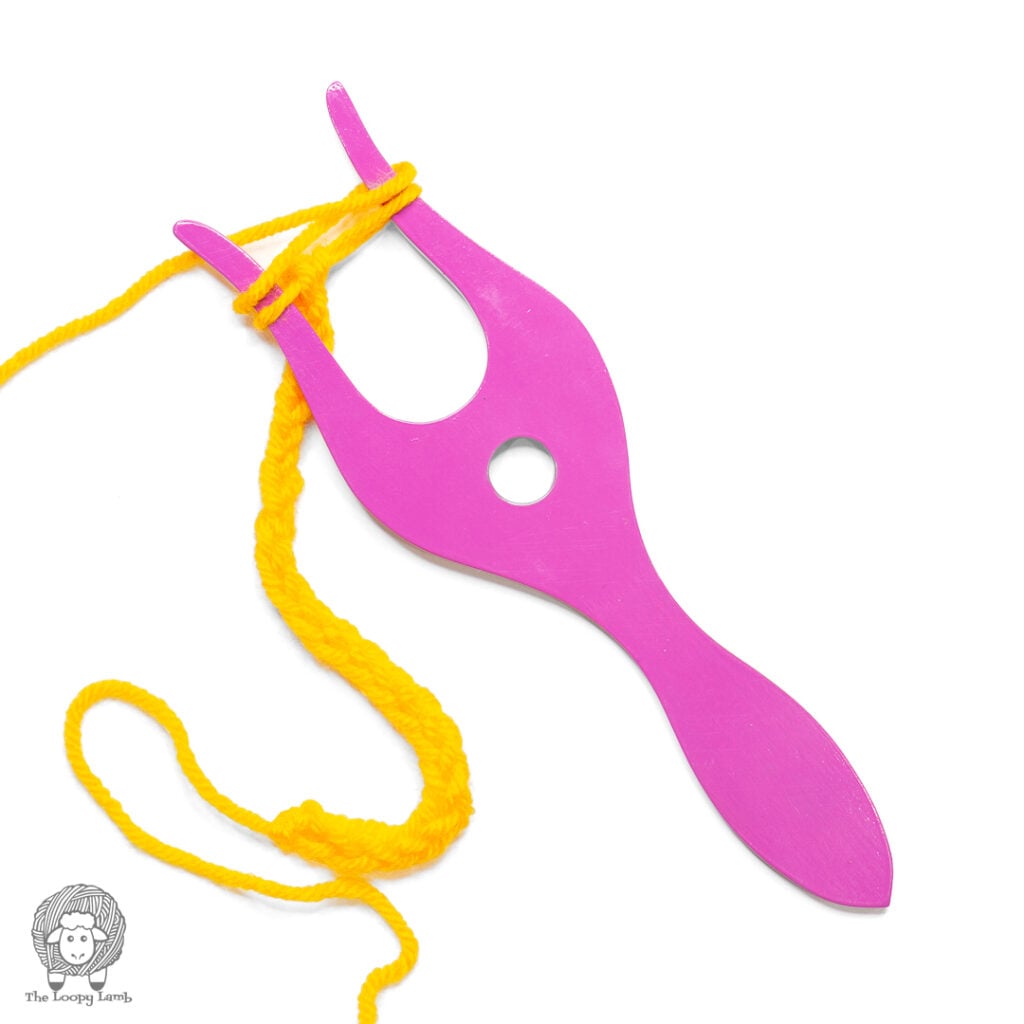
Lucet forks and i-cord makers are tools designed to help you create i-cords either manually or with a machine. While they can absolutely be useful for some crochet projects, many of these crochet tools are fairly expensive considering they really only serve one purpose.
I was recently offered an i-cord machine to feature on social media and ultimately turned it down because I already own three different lucet forks that I never use. For me personally, they ended up becoming one of those crochet supplies that mostly collect dust between projects.
Unless you regularly make projects that use i-cords for things like drawstrings, straps, or decorative details, I don’t think this is something most beginner crocheters need to rush out and buy right away.
Specialized Gauge Ruler
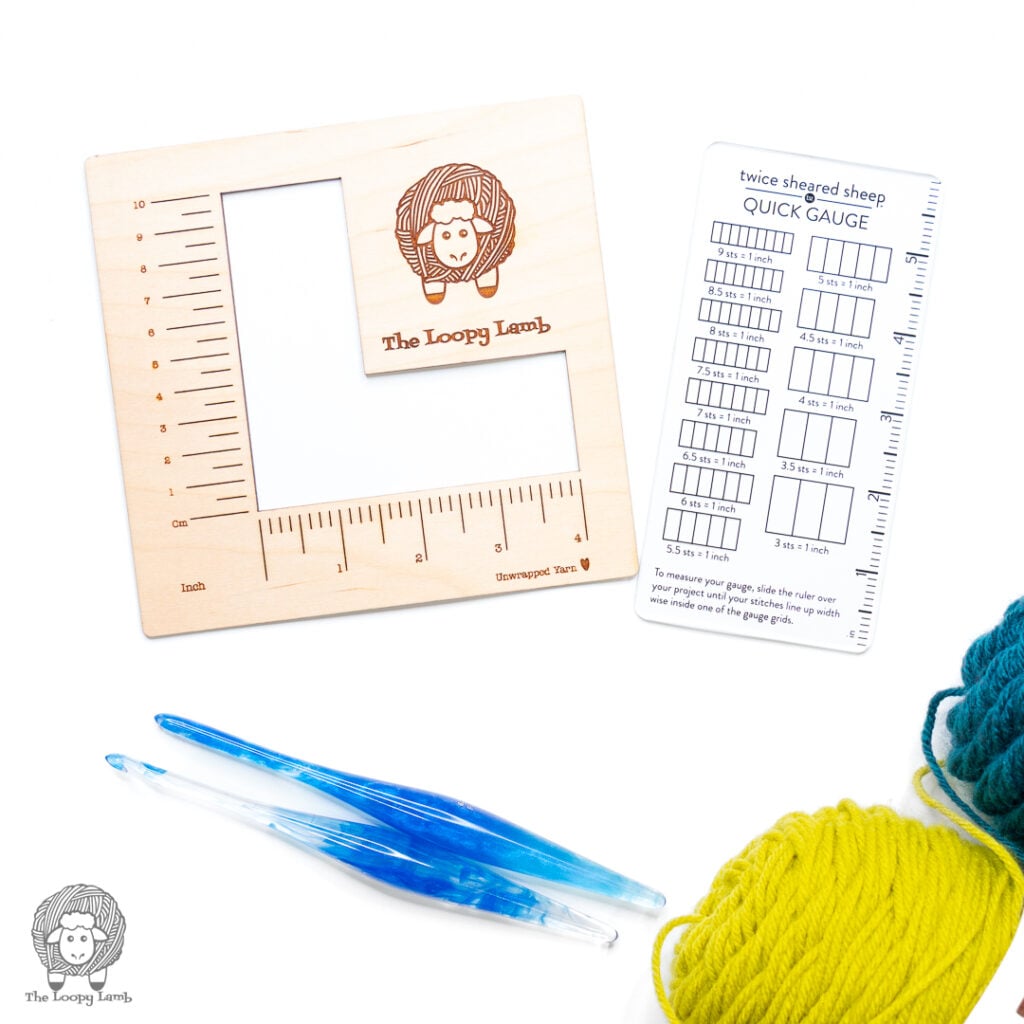
Gauge rulers are specialty crochet tools designed to make measuring gauge faster and easier. I was given a handmade one years ago that was a large square with a smaller square cut out of the center to help measure stitches and rows.
While I thought it was handy at first, I found myself reaching for a regular ruler or measuring tape far more often since they gave me more flexibility and more accurate measurements overall.
For most crocheters, especially beginners, I don’t think a specialized gauge ruler is something you need to spend extra money on when a basic measuring tape or ruler will do the job just fine. Want to find out if you’re measuring your gauge correctly? Check out my free gauge calculator to double check your gauge.
Steel Hooks
Steel crochet hooks are itty bitty crochet hooks that are typically used for ornate designs like lace projects and micro crochet. Steel crochet hooks are typically hooks smaller than a 2.0 mm crochet hook – far outside the sizes in a standard crochet hook set.
Working with such small hooks and fine yarn or thread can be intimidating and difficult to see, especially for beginner crocheters and those with visual impairments. When I teach beginners, I usually start them with a worsted weight yarn and a 5.5mm (I) or 6mm (J) crochet hook because the larger stitches are much easier to see and work with while learning.
Unless you specifically plan to make lace projects, doilies, or micro amigurumi, I think steel crochet hooks are something most crocheters can comfortably wait to explore until they feel more confident and experienced.
Row Counters
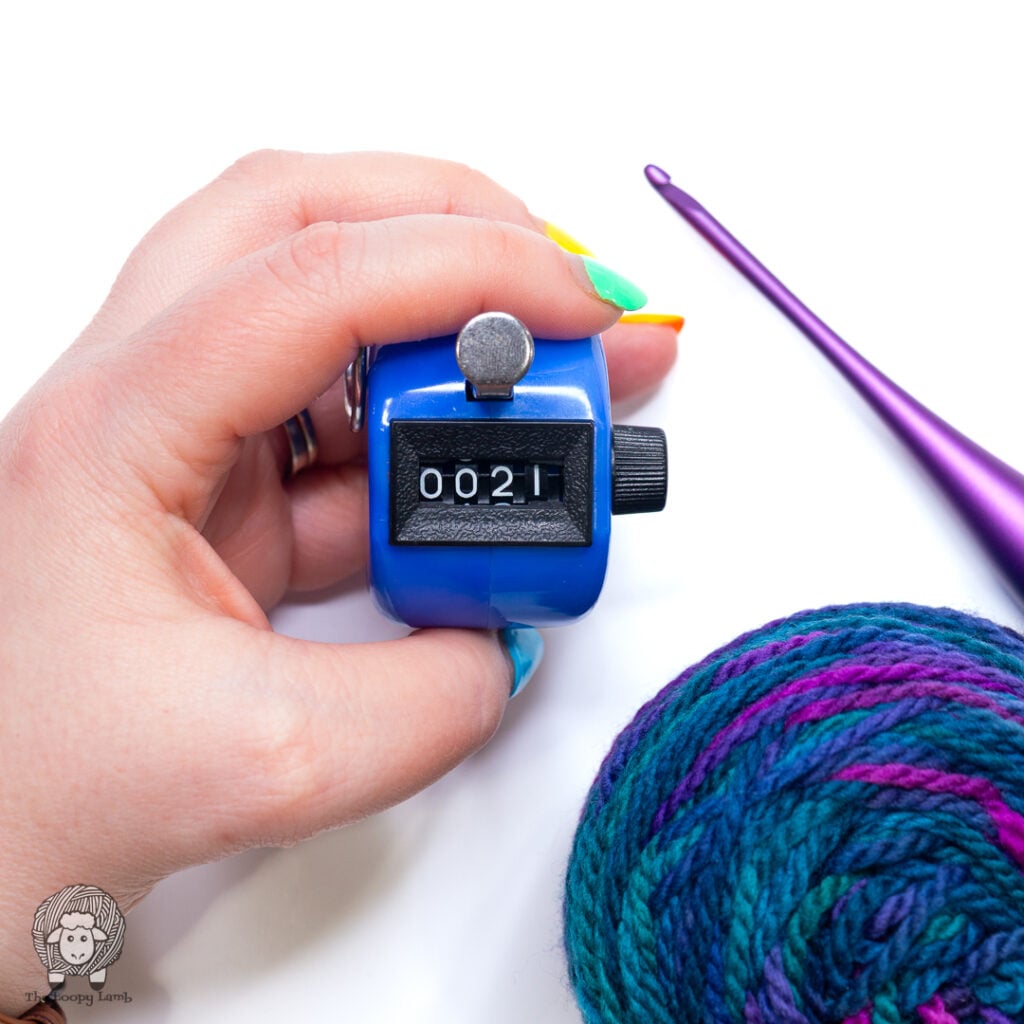
Row counters are another crochet tool I see all over social media, especially the digital versions worn as rings while you crochet. A row counter is designed to help keep track of your rows or repeats while you work.
I’ve purchased a few over the years and have also been gifted some… and can you guess how many I actually use? Zero.
I almost always end up going back to a piece of paper and a pen instead.
Part of the problem is that I lose the darn things more often than I use them, but I’ve also found that they’re not always as reliable as I’d like. When worn on your finger, it’s surprisingly easy to accidentally press the button and add rows you never crocheted or even reset the counter completely and end up sitting there wondering where things went wrong (ask me how I know).
You also have to remember to stop and actually press the button every time you finish a row or repeat, which can interrupt your flow while crocheting (if you even remember to do it. Again – ask me how I know).
That said, I know plenty of crocheters who genuinely love row counters and have made them part of their crochet system. I just don’t think they’re something most beginners need to rush out and buy right away.
Essential Crochet Tools Every Beginner Should Have
Stitch Markers
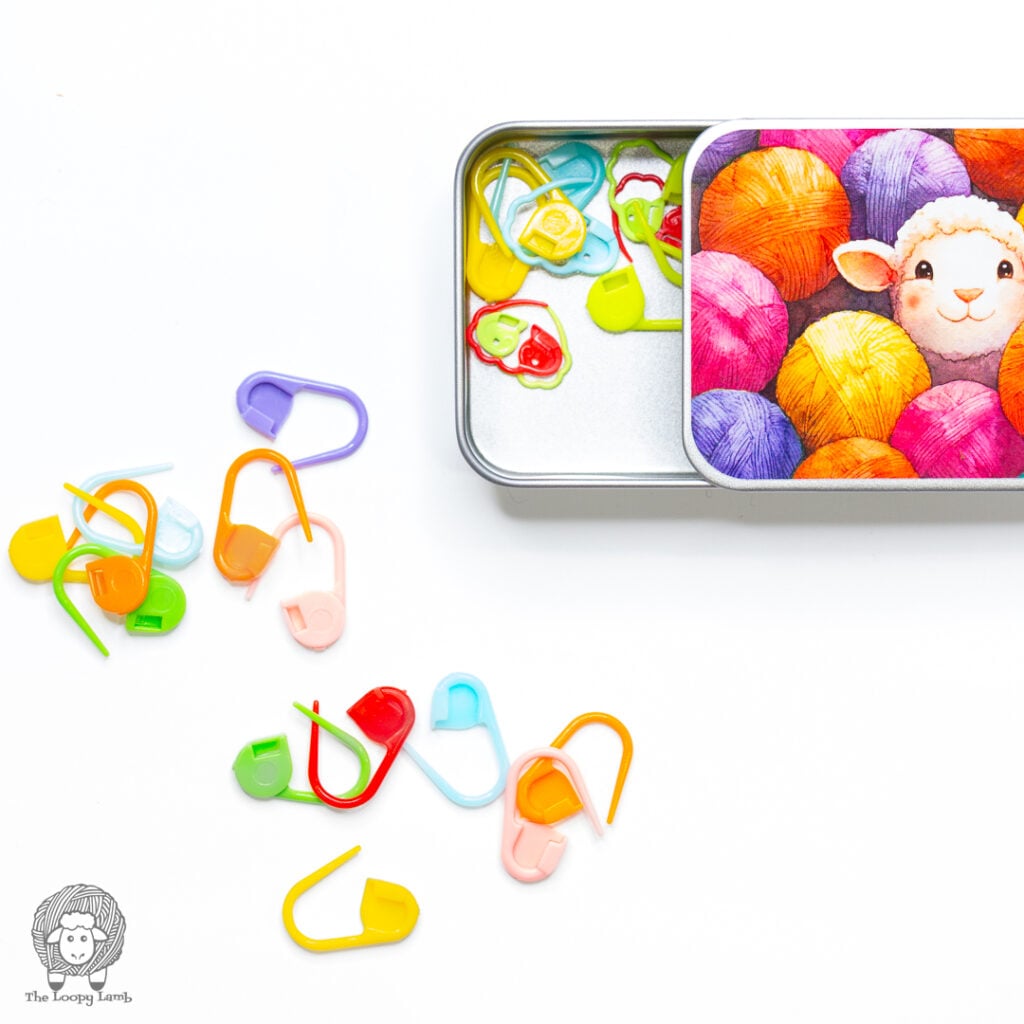
Stitch markers are, in my opinion, one of the most underrated crochet accessories in a crocheter’s toolkit and something many beginners think they’ll be fine without.
They can be used for holding your stitch in place, marking stitches, temporarily holding pieces together, tracking repeats, and so much more.
One of my favorite tips when I’m teaching new crocheters is to place a stitch marker in the first and last stitch of every row — yes, even if they’re “just” making a blanket or scarf. Marking those stitches helps crocheters clearly see where to start and stop, which makes it much easier to keep edges straight.
Those small successes early on can make a huge difference in building confidence and helping crocheters feel ready to move on to bigger projects. So whether you buy actual stitch markers (I recommend these locking stitch markers for beginners) or use something you already have around the house like bobby pins, scrap yarn or safety pins, make sure you always have a few in your project bag.
Sharp Scissors
Nothing is more frustrating to me than trying to cut yarn with a dull pair of scissors. Without the clean cut of a sharp pair of scissors, yarn can fray, become difficult to thread through the eye of a yarn needle, and make finishing techniques like weaving in ends or seaming much more frustrating than they need to be.
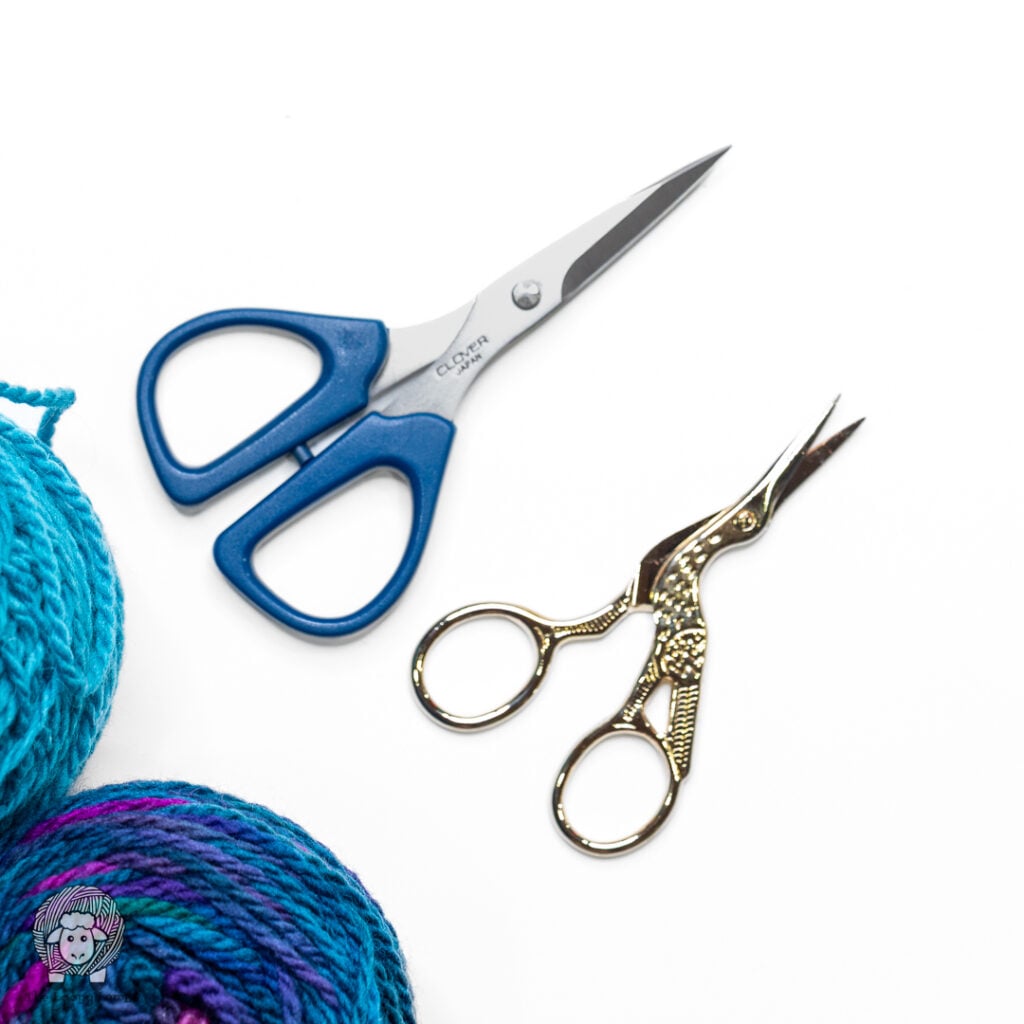
If I’m ever asked what crochet tools I would personally splurge on for my crochet kit, my answer is always the same: a comfortable crochet hook and a sharp pair of scissors.
You may be wondering, “How do I know if the scissors I see online or in-store will actually be good for crochet?” I always recommend checking the sewing or embroidery sections. If the scissors are designed for cutting fabric or thread, there’s a good chance they’ll work well for yarn too.
These mini quilting scissors from Clover are my personal favorites and the pair I reach for daily. I also keep small embroidery scissors like these ones in my travel project bags.
One thing I especially like about scissors this size is that they’re small enough to be allowed on many airlines, making them handy for crochet travel projects. (Be sure to check with your local transportation authority before travelling, and you can also check out my Can I Take My Crochet Hook on an Airplane post for more crochet travel tips.)
A Good Tapestry Needle
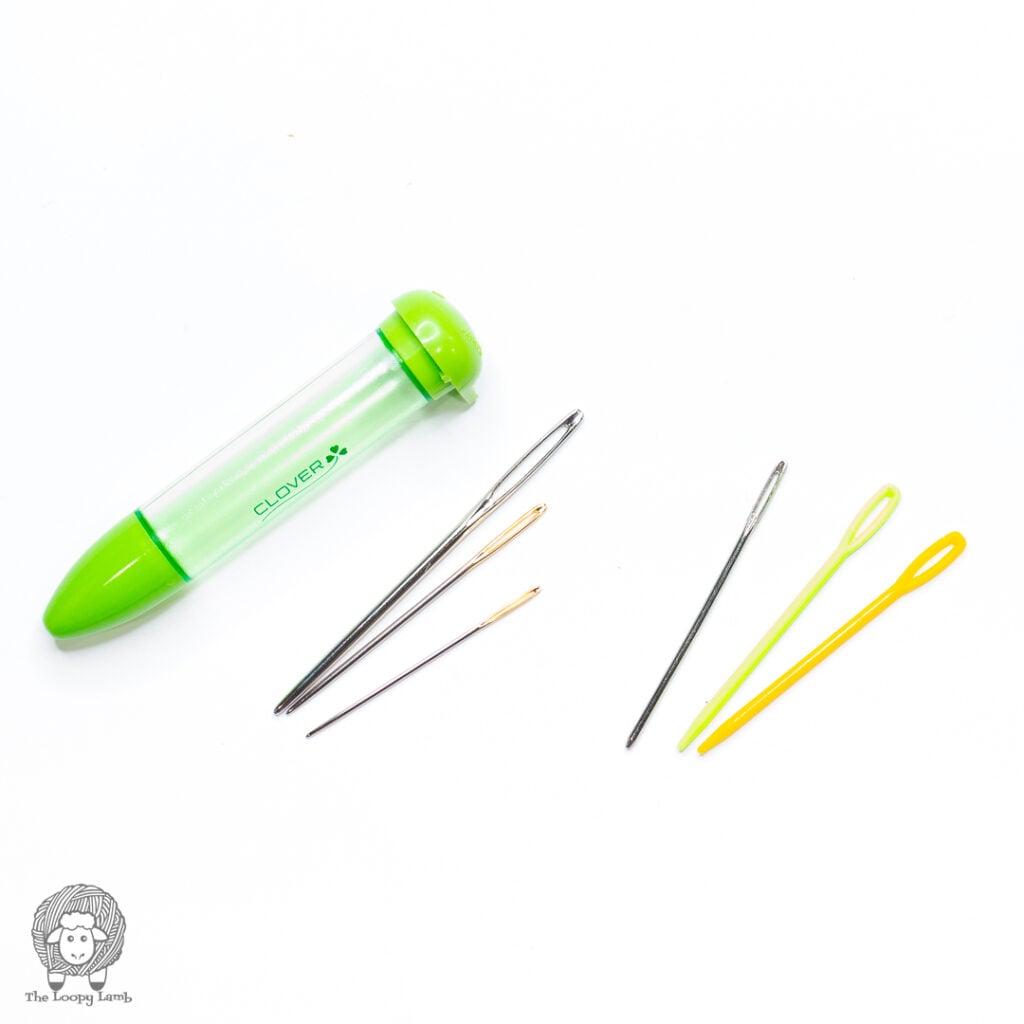
Tapestry needles (also called yarn needles) come in a variety of different sizes. Smaller needles usually have a smaller eye and work best with lighter weight yarns, while larger needles with a large eye are better suited for bulky yarns.
Many beginner crochet kits include large-eye plastic tapestry needles, but I always recommend beginners pick up a few metal yarn needles as well. Not only do they glide through yarn much more smoothly, but plastic needles can sometimes develop tiny rough edges that snag on the yarn over time.
I also find that metal tapestry needles hold up much better long-term since they don’t bend as easily and can last for years… assuming you don’t lose them every two days like I do.
Clover makes some great tapestry needle sets that include multiple yarn needle sizes, which makes it easy to find the right needle whether you’re working with thinner yarns or bulky yarn. Plus they have the added bonus of coming in a little storage container to keep them together.
A Tape Measure & Ruler
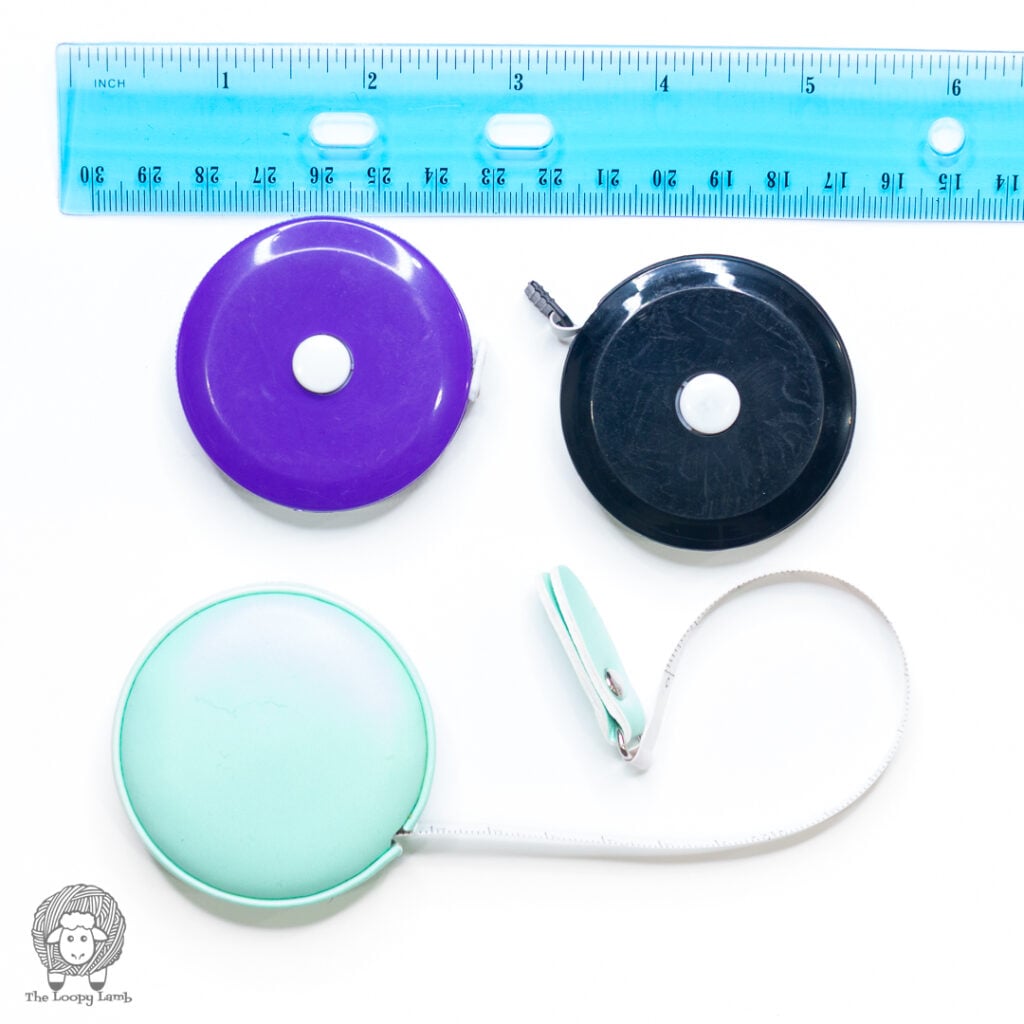
A tape measure and a ruler are two crochet tools that may not feel very exciting, but they’re absolutely essential to have in your crochet toolkit. They’re useful for measuring gauge, checking finished project sizes, and making sure your crochet projects match the measurements listed in a crochet pattern at given intervals.
I always recommend having both a flexible tape measure and a hard ruler on hand because over time, tape measures can stretch slightly and become less accurate. When checking crochet gauge, I also recommend measuring on a firm, flat surface whenever possible since measuring while holding your project in the air or on a soft surface can distort your numbers.
And if you’re ever unsure whether your gauge math is correct, you can always double check your numbers with my free crochet gauge calculator here.
Good Crochet Hooks
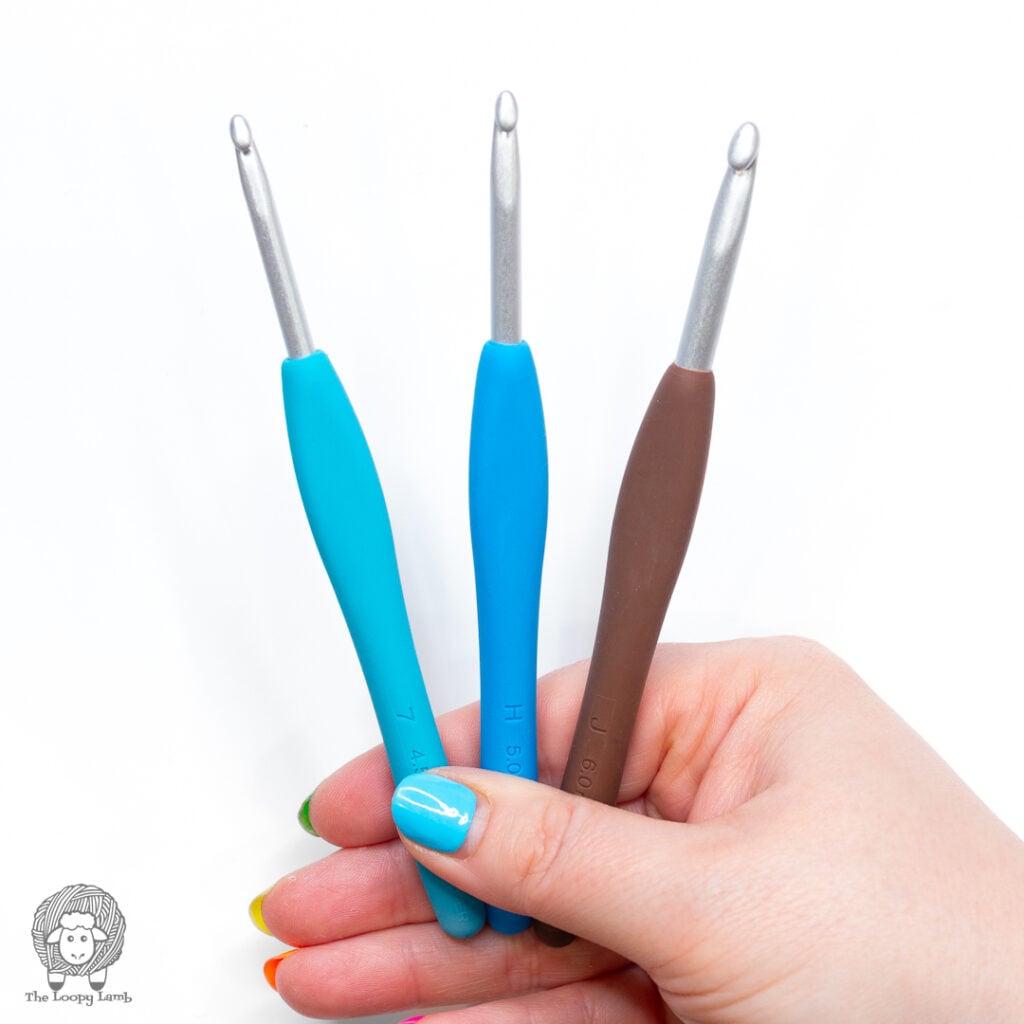
Crochet hooks come in many different sizes, materials, shapes, and styles. There are plastic crochet hooks, wooden hooks, and metal hooks to name just a few. Different hook materials can affect how the hook feels and performs with certain yarns, but for most beginners, I recommend keeping things simple when starting out.
Rather than investing in a giant crochet hook set right away, I think it’s much better to start with a small number of good quality crochet hooks in commonly used sizes and figure out what you personally enjoy working with first.
My go-to recommendation for beginner crocheters is the Clover Amour crochet hooks. They’re metal hooks with comfortable handles that glide smoothly through yarn and are generally easy for most beginners to work with while learning basic crochet stitches and techniques.
And while crochet hooks can come in a ton of fun colors, shapes, and aesthetic designs, the most important thing is not whether the hook looks pretty — it’s whether the crochet hook fits your budget and allows you to crochet comfortably.
If you’re unsure which crochet hook size or type is best for your project, check out my guide to crochet hook sizes for beginners and my my ultimate guide on how to choose the right crochet hook for your project for more help understanding hook sizes, materials, and yarn pairings.
Crochet Tools That Become More Helpful Later
A Yarn Winder
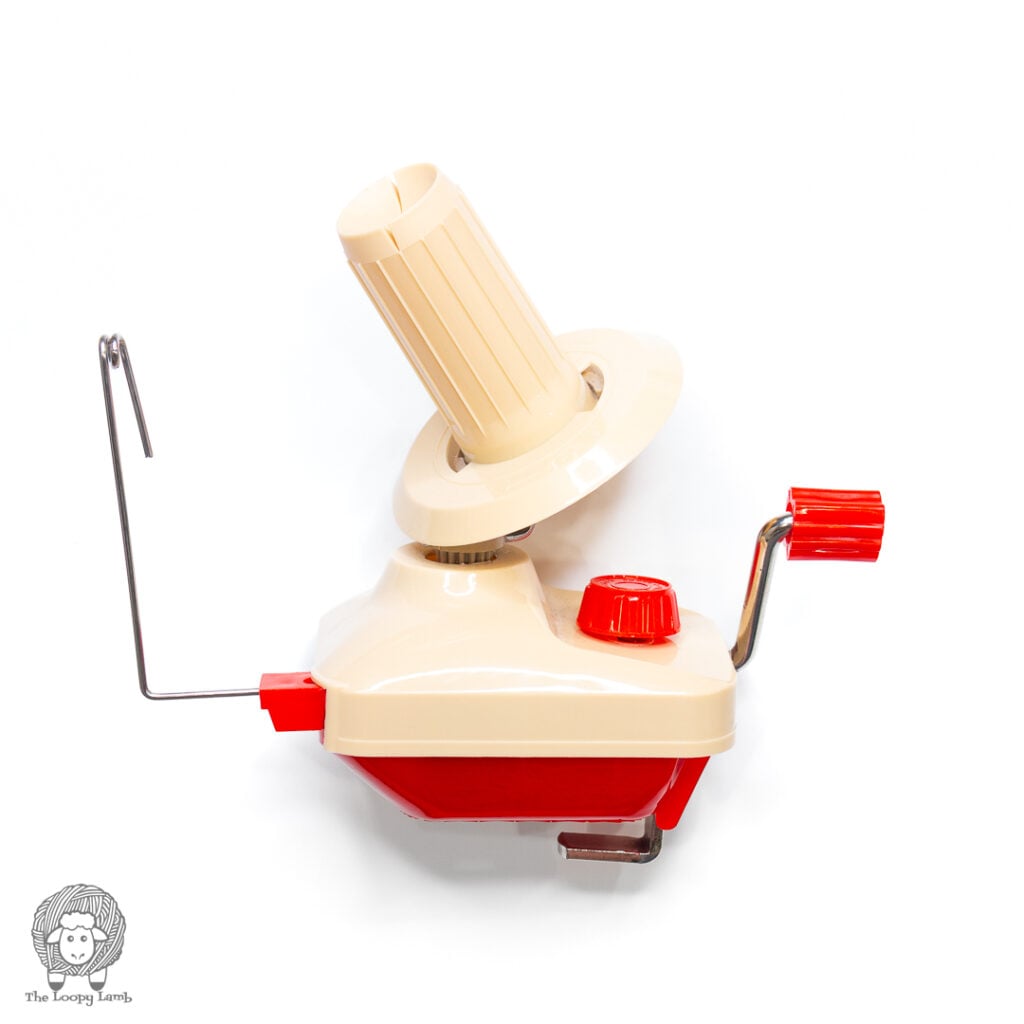
A yarn winder (also sometimes called a ball winder), is a tool used to wind yarn into a yarn cake. Yarn winders can be manual tools that you crank by hand (like my trusty Stanwood yarn winder) or an electric tools (like this Caydo yarn winder – check out my review of it here).
If you use a lot of hand-dyed yarn or specialty yarns sold in hanks, a yarn winder quickly becomes one of those crochet tools that’s almost essential since hanks need to be wound before they can realistically be used for crochet projects. Winding yarn into cakes can also make yarn easier to store, travel with, and use in yarn bowls.
The cost of yarn winders can vary quite a bit, so I always recommend thinking realistically about how often you’ll actually use one before making a purchase. A more affordable yarn winder like this one from Amazon will work perfectly well for many crocheters getting started. However, since they’re often made mostly from plastic, they may eventually wear down with heavier use over time.
Higher-end yarn winders like the Stanwood are usually made primarily from metal and tend to hold up much better long-term, especially if you wind yarn frequently.
One important thing to know is that Stanwood yarn winders are widely considered the gold standard when it comes to yarn winders, which unfortunately means there are now a lot of copycat listings online — especially on Amazon. If you decide to purchase a Stanwood yarn winder, make sure you either use a trusted direct link or verify that the seller/company name listed is actually “Stanwood Needlecraft” to avoid accidentally purchasing an imitation.
Ergonomic Hooks
I used to work in HR and specialized in workplace safety, so ergonomics are something that have always been important to me. That said, ergonomic crochet hooks are not usually something I recommend beginners rush out and invest in right away.
Before spending a lot of money on ergonomic crochet hooks, I think it’s important to first determine whether you genuinely enjoy crochet and plan to stick with it long-term. Once you know crochet is a hobby you love, that’s when I recommend taking a closer look at finding the right crochet tools for you.
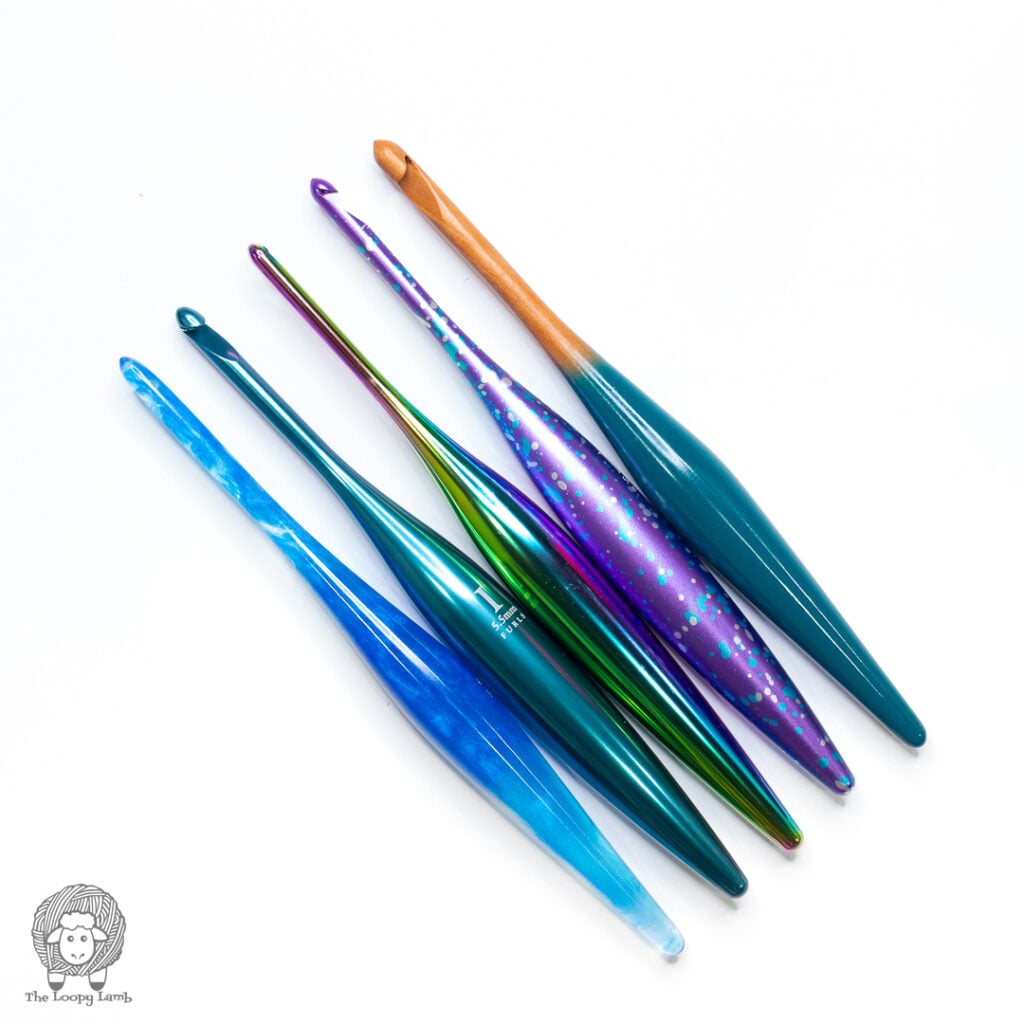
Like ergonomic tools in any industry, ergonomic crochet hooks can be expensive and are often best viewed as an investment in comfort while crocheting. I usually recommend purchasing them gradually, starting with the crochet hook size you use most often.
My personal favorite ergonomic crochet hooks are the Odyssey II crochet hooks from Furls Crochet, but every crocheter holds their hook differently and has different preferences. The “best” crochet hook really depends on what feels most comfortable for you and allows you to hold your hand in an ergonomic position.
That said, even the right crochet hooks are only one part of crocheting comfortably long-term. Taking breaks, stretching your hands, wrists and arms, and paying attention to your posture and overall ergonomics while crocheting can make a huge difference too.
Building Your Crochet Toolkit Over Time
One of the things I love most about crochet is that you really don’t need a huge collection of crochet tools and supplies to get started. A comfortable crochet hook, some yarn, a pair of sharp scissors, stitch markers, and a yarn needle will take you surprisingly far.
As you continue on your crochet journey, you’ll naturally figure out which crochet tools actually fit the way you like to crochet. Some crocheters love yarn bowls. Others swear by tension rings, ball winders, luxury crochet hooks, or specialized crochet accessories. There’s no “right” way to build your crochet toolkit.
The important thing is not feeling pressured to buy every trendy crochet gadget you see online before you’ve even made your first few projects. Some tools genuinely can make crocheting easier or more enjoyable, but many are things you can add later if and when you discover a real need for them.
At the end of the day, crochet should feel creative, relaxing, and accessible — not like a hobby where you need to spend hundreds of dollars on tools before you can enjoy it
FAQ SECTION
A beginners crochet set should includes crochet hooks of various sizes (more on this in a second), stitch markers, a tapestry needle, yarn and a sharp pair of scissors. I always recommend starting off with a single crochet hook (usually a 5.5mm(I) or 6.0mm(J) crochet hook) to start to see if you enjoy it before committing to a full crochet hook set.
Absolutely! If you find that you love crochet and intend to practice it long term, ergonomic crochet hooks are worth the investment to protect your hand health. That said, no ergonomic crochet hook is a silver bullet treatment and it should be used in conjunction with taking breaks, stretching and sitting ergonomically while you craft. My favorite ergonomic crochet hooks are these Odyssey II crochet hooks from Furls Crochet.
Definitely not. This is a nice-to-have not a need. Many crocheters will end up with a cost-effective yarn that is sold in a skein from their local yarn shop that doesn’t need or fit into a yarn bowl when they first start. This is absolutely something that can be purchased later if you think it will be helpful to you.
The best crochet hook for beginners is one that fits within the crocheter’s budget and is comfortable to work with. I always recommend buying only 1 or 2 crochet hooks to see if you like the craft before buying a full set. I recommend these Clover crochet hooks as first crochet hooks for beginners as they are comfortable to use, good quality while being cost-effective.
Other Helpful Guides You’ll Love:
- How to Get Started Crocheting for Charity
- How to Tell the Right Side From the Wrong Side
- Crochet Standards All Crocheters Should Know (But Aren’t Always Told)
Join The Loopy Lamb Crochet Community Facebook Group to connect with other crocheters, share your projects, and chat all things crochet tools, yarn, and patterns! Don’t forget to follow me on social media so you always know when new youtube tutorials and other new free crochet patterns are released. Happy Crocheting!
Facebook Page: www.facebook.com/TheLoopyLamb
Instagram:www.instagram.com/TheLoopyLamb
YouTube: The Loopy Lamb YouTube Channel
TikTok: www.tiktok.com/@theloopylamb
Pinterest:www.pinterest.com/theloopylamb
Newsletter: Sign up for my newsletter!